

Learning to work with uncertainty: Allergy care in the North
4 February 2026
In this blog, we welcome back MSc in Global Healthcare Leadership student Michelle Kwok (Cohort 4) as she reflects on Module 2 of the programme and her experience delivering allergy care in northern Québec. Through stories from Nunavik and Cree territory, she examines leadership, complexity and decision-making in health systems where uncertainty is not an exception but the norm.

About the author: Michelle Kwok is an allergist practising in Québec, Canada, with a clinical practice that includes specialist outreach in Nunavik and Cree territory. Her work focuses on delivering allergy care in settings shaped by distance, travel, and jurisdictional complexity. She is a member of Cohort 4 of the MSc in Global Health Leadership at the University of Oxford.
One morning during an outreach clinic in Nunavik, my schedule looked straightforward on paper. By mid-morning, it no longer did.
That day, a patient did not arrive because their flight the night before had been cancelled. Another patient could not be reached. The phone number on file no longer worked, and no one was certain which number to try next. A third patient arrived without an appointment, having heard through the community that I was there. I saw them anyway. It felt wrong not to.
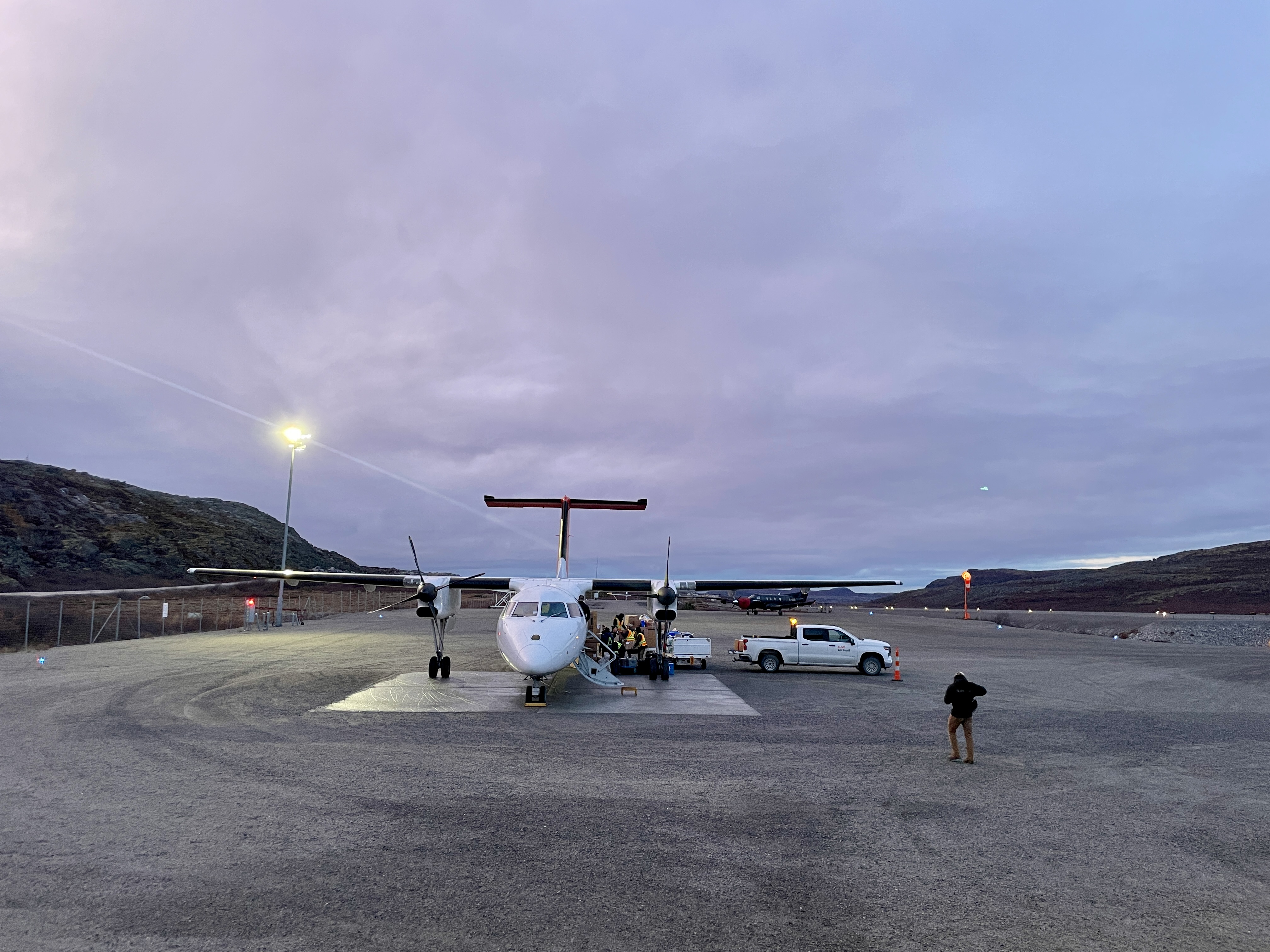 Airport in Kangiqsualujjuaq (known as George River) in Nunavik
Outside, the light was already shifting across the snow and rock, and the cold made the air feel sharp. Inside, I adjusted my plan again, not because care was unavailable, but because the conditions that made care possible kept changing.
This rhythm is familiar in my work. Outreach clinics rarely unfold as planned. I prepare carefully, knowing that weather and travel often reshape the day, alongside staffing and communication constraints. I rely heavily on people who know families and communities far better than any chart or platform ever could. Care moves forward not because systems are seamless, but because people adapt and persist.
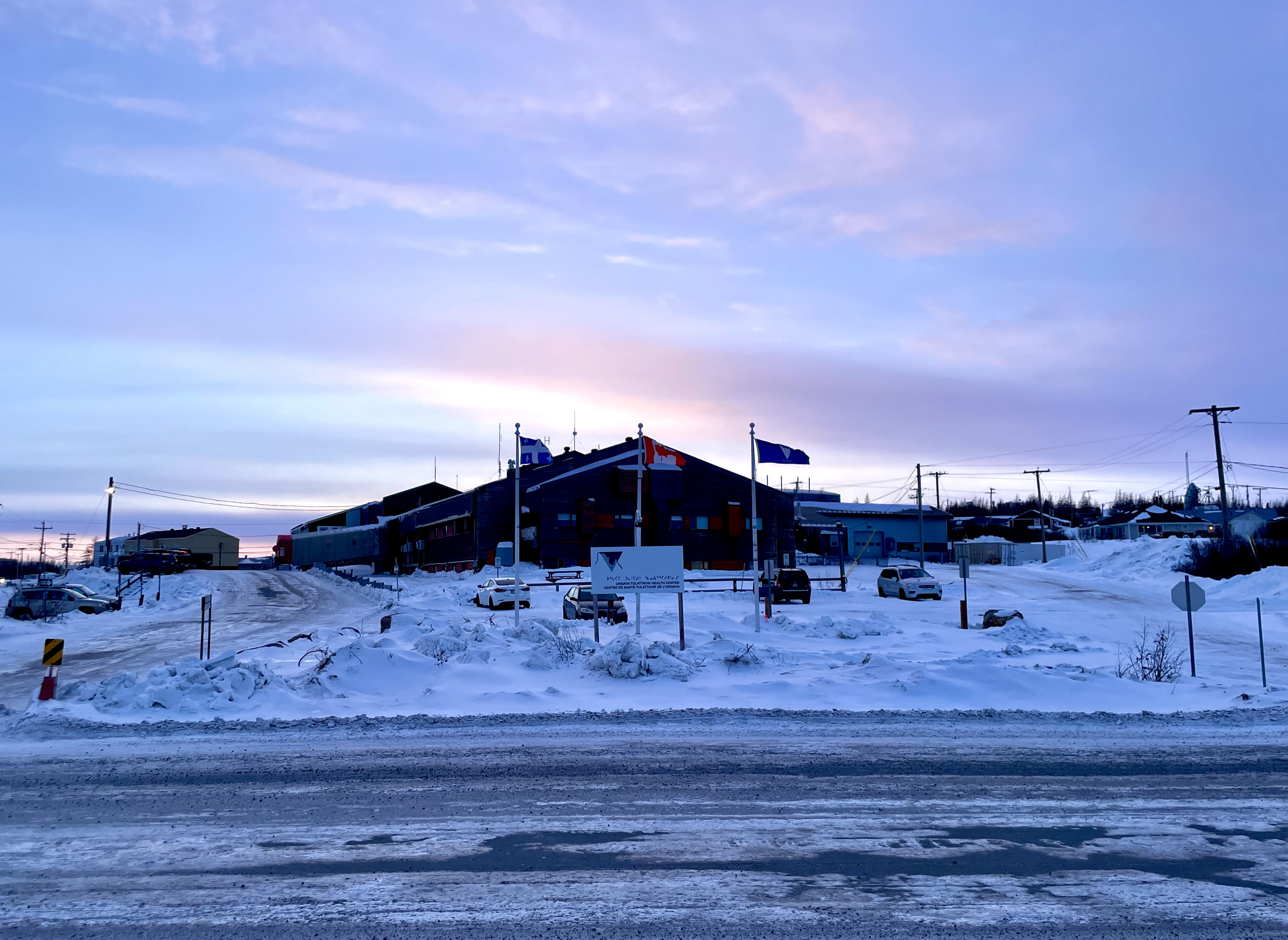 Ungava Tulattavik Health Centre, Kuujjuaq, Nunavik. Known colloquially as Kuujjuaq Hospital, it is the main 'hospital' for the Ungava region
For a long time, I thought of this as inefficiency. Something to endure or eventually correct with better systems. I assumed that with enough optimisation, care in the North might begin to resemble care in urban settings. It never did.
What I did not yet understand was that I was misnaming the problem.
Alongside this work, I am a member of Cohort 4 of the MSc in Global Health Leadership at Oxford. Module 2 of the programme focuses on organisational leadership and decision-making under uncertainty. As we worked through these ideas, something shifted for me. The material did not feel new; it gave me language for what I had been experiencing for years.
What I encounter in the North is not a system failing to behave properly. It is a system behaving as complex systems do. It adapts, responds and reorganises under constraint.
This is what we mean by complexity in health care. Not complication, which can be addressed through better planning or clearer protocols, but complexity, where outcomes are unpredictable and relationships matter more than rules. In complex systems, control is limited and linear solutions often fail.
Seen through this lens, my daily work began to look different. The constant adjustments were no longer signs of personal improvisation or system breakdown. They were the work itself. Leadership in this context was not about imposing order, but about navigating uncertainty with care.
Unlike the UK’s NHS, health care in Canada is publicly funded but delivered through multiple systems. Responsibility is shared between federal and provincial governments, and in Indigenous contexts this is further shaped by treaty obligations and parallel federal programmes. In practice, this means care is often delivered across overlapping jurisdictions rather than within a single, integrated system.
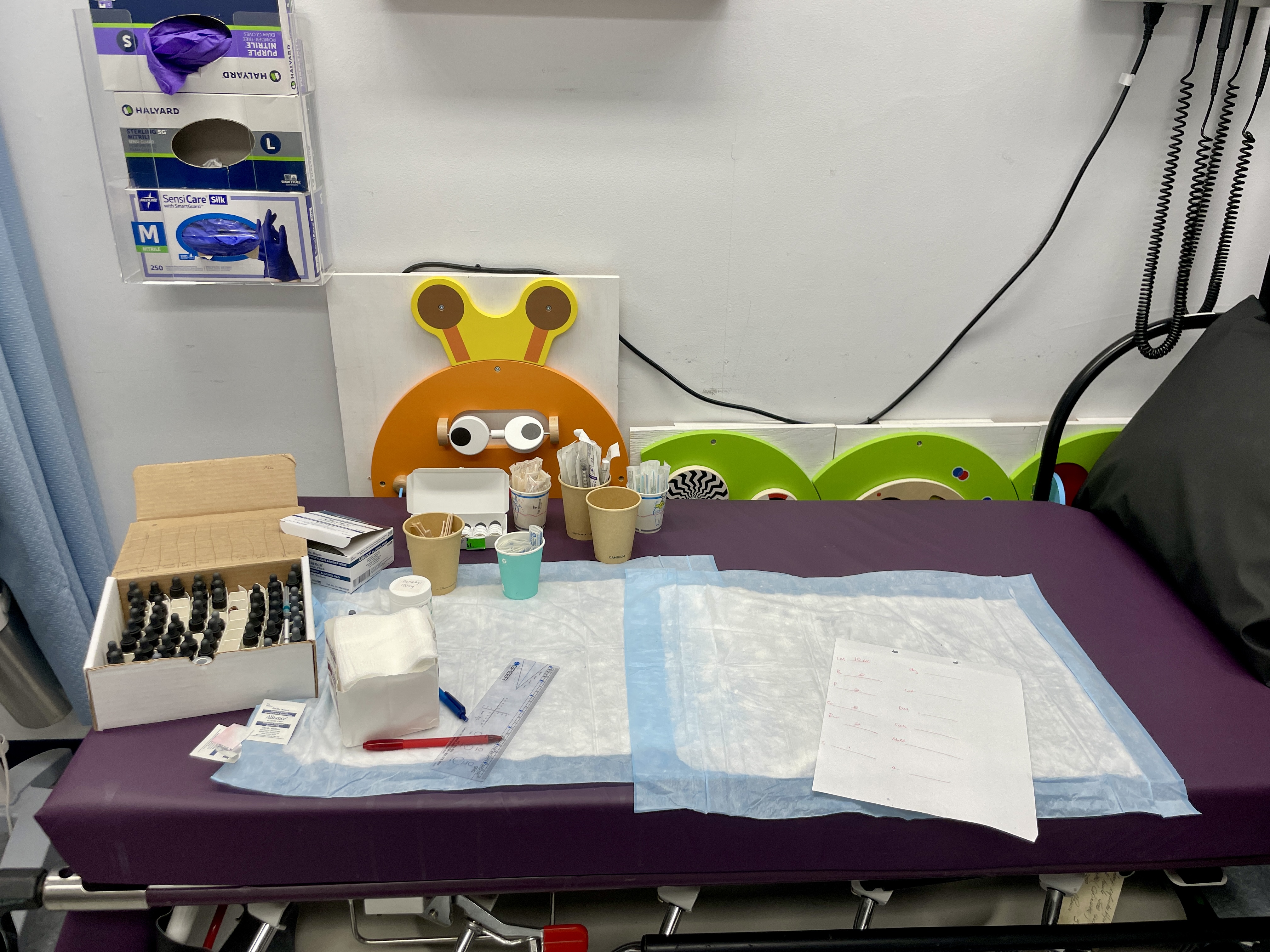 Allergy skin test setup at Kuujjuaq Hospital
In Nunavik, uncertainty is structural. Distance and weather shape clinical decisions, while workforce instability and jurisdictional constraints limit what is possible. Care depends less on formal pathways and more on relationships. Knowing who to call, when to try again and when to change course matters as much as clinical expertise. I have written before about moments where everything seems to intersect in the North. Those moments are not exceptions. They are the fabric of practice.
Culture here is not an add-on. It shapes how time is experienced and how trust and care are negotiated. Shared meals, conversations outside clinic walls and simple presence influence whether care feels safe or extractive. These moments do not sit outside the system. They quietly sustain it.
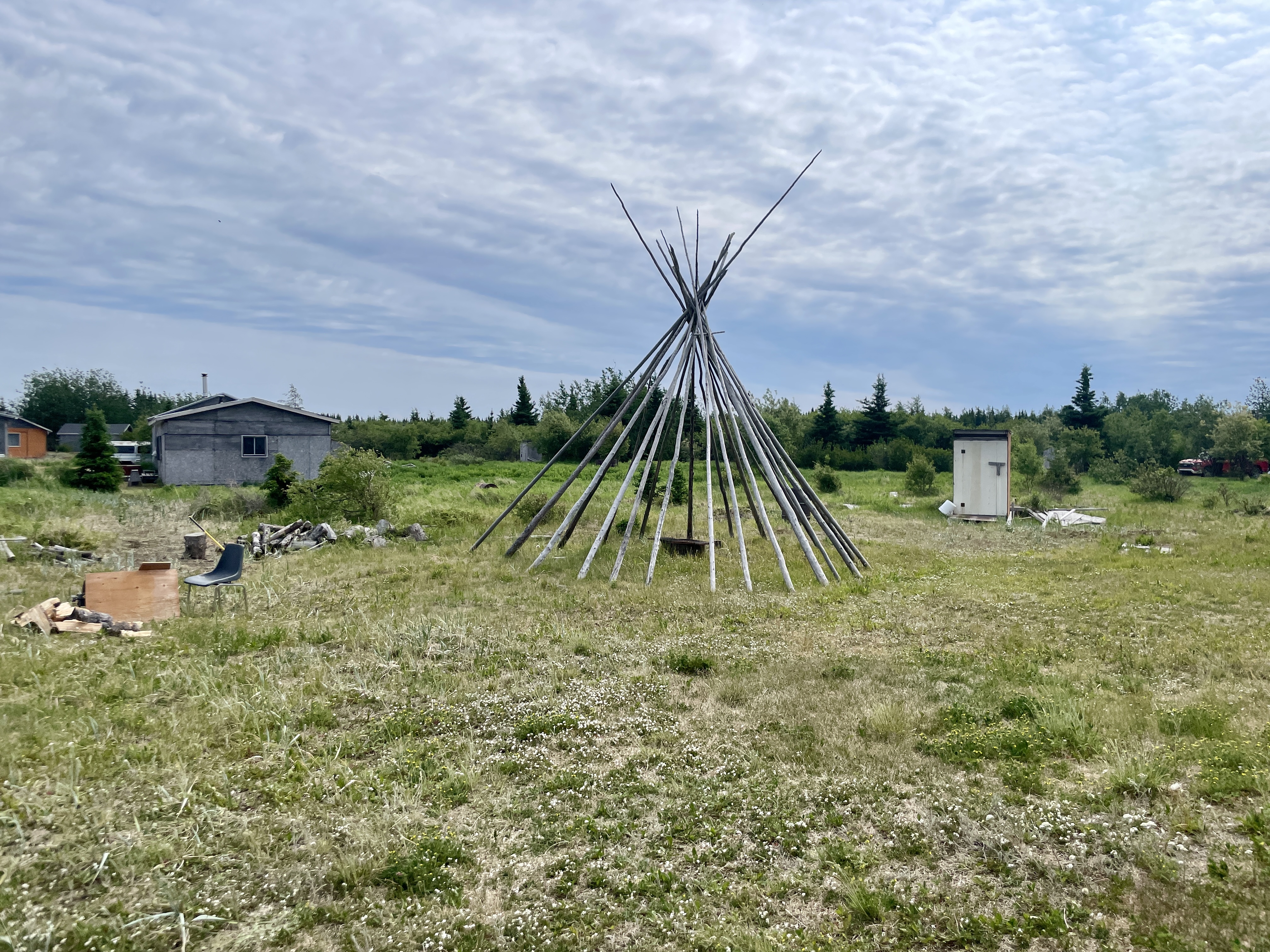 Tipi in Fort George, just outside Chisasibi, Québec, where Michelle attended Mamoweedow, an annual traditional Cree gathering
My relationship with Cree territory began in November 2021, when I first worked there as a medical resident. My more recent work has included telemedicine since June 2024, with my first in-person visit as a consultant specialist taking place in July 2025. Although Nunavik and Cree territory are both in Québec, they are entirely different jurisdictions, with distinct governance structures and relationships to the health system. Working in Chisasibi sharpened my awareness that context cannot be standardised. Treating these regions as interchangeable might simplify administration, but it undermines care.
Module 2 helped me see that leadership across contexts requires restraint as much as action. It asks us to resist imposing uniform solutions and to remain attentive to how power, history, and place shape health systems from within.
One idea that stayed with me was the emphasis on capability rather than competence. Competence suggests mastery of known tasks. Capability recognises that in complex settings, the task itself may change. In northern practice, effectiveness depends less on executing a plan perfectly and more on adapting thoughtfully when the plan no longer fits. That requires reflection, humility, and learning in real time.
Alongside the programme, I have been involved in early-stage research and design work on community-based health monitoring initiatives in northern Québec. These projects are still forming. They are shaped by questions of relevance, trust, and sustainability rather than timelines or outputs. Working on them has reinforced what Module 2 made explicit. Leadership in complex systems often means resisting premature certainty. Moving slowly and relationally is not a lack of ambition. It is an ethical stance.
 Michelle holding paper charts during outreach to Chisasibi Hospital
What I carry forward from Module 2 is not a framework to apply wholesale, but a shift in how I understand my role. Leadership now looks less like control and more like stewardship. It involves holding space for uncertainty and recognising labour that rarely becomes visible, while being honest about what cannot be standardised.
Working in the North has taught me that care happens at the intersections between systems and people, between policy and place, and between intention and reality. Module 2 helped me understand that those intersections are not problems to resolve. They are where leadership lives.
What to read next
Prescription without diagnosis: Why LMICs must lead with evidence in healthcare
20 November 2025
In this blog, MSc in Global Healthcare Leadership student Dr Cosmas Mugambi reflects on concepts from the ‘Leading with evidence-based healthcare’ module of the programme, specifically how it may be applied to low- and middle-income countries (LMICs).
Learning leadership through arrival
20 January 2026
MSc in Global Healthcare Leadership student Michelle Kwok reflects on the start of the programme, including the first module, matriculation and debates at the Oxford Union.