

Listening to Workforce Voices: Rethinking Sustainability in Under-Served General Practice

As concerns about workforce sustainability in general practice continue to grow, particularly in under-served communities, this blog reflects on how evidence and lived experience can inform one another. Drawing on the Workforce Voices research programme and a co-production workshop with GP tutors, it explores what sustains people in their roles – and why listening to those on the frontline matters as much as policy ambition.

Workforce sustainability is one of the most urgent challenges facing the NHS. It is particularly acute in general practice settings working with under-served communities. Addressing these challenges requires more than keeping services staffed; it depends on creating working conditions in which people feel supported, valued and able to remain in their roles over time.
This blog brings together emerging research from the NIHR-funded Workforce Voices programme with insights from a co-production session held at the GP tutors’ conference run by the Nuffield Department of Primary Care Health Sciences. It aims to show how evidence and lived experience can inform one another and help shape research and action that are grounded, relevant and capable of driving meaningful change.
The workforce sustainability challenge: why we need a new approach
The potential for a truly integrated, community-focused NHS has never been greater. The NHS 10-year health plan sets out an ambitious vision to shift care from hospitals to the community, move analogue to digital and pivot from treating sickness to preventing it.
The sheer scale of the challenge can sometimes make it difficult to imagine a sustainable future for General Practice (GP), especially in under-served communities struggling with chronic under-resourcing, workforce gaps and complex patient needs. The ability to recruit, retain and support staff in the NHS so that they can provide high-quality care is the foundation upon which the NHS 10-year health plan sits. A sustainable workforce is necessary to achieve the shifts laid out in the plan.
Workforce voices: research grounded in lived experience
This challenge is the foundation of our work within Workforce Voices, a National Institute for Health and Care Research (NIHR) funded collaboration between the universities of Oxford, Newcastle, Northumbria, Birmingham, and York. Co-led by Professor Gill Vance and Dr Bryan Burford (University of Newcastle) the team works collaboratively to share expertise in designing, collecting, engaging and producing information to identify problems and workable solutions that address NHS workforce challenges.
At the heart of this work are two major realist reviews led by Professor Sophie Park, Professor of Primary Care and Clinical Education. Alongside these reviews, groups of healthcare professionals, patients and members of the public contribute their perspective, support through our Community Engagement Involvement (CIE) panel led by Dr. Megan Brown (University of Newcastle). By centring the voices of those on the frontline, the research remains grounded in reality and delivers meaningful impact for the people who work in and use the NHS.
Unlike standard reviews, realist reviews go beyond ‘what works’ to examine the specific circumstances that make an intervention successful. Our realist reviews are currently looking at two areas of workforce sustainability: the evolving role of general practice receptionists and administrators, and the complexities of the primary-secondary care interface – the space where communication, referrals and co-ordination of patient care occurs between hospital and the community services. By connecting our research evidence with frontline experience, we aim to find ways of improving the working experience of different staff groups in the NHS, specifically in general practice and maternity services.
Reflecting on workforce aspirations
Understanding workforce sustainability requires engaging directly with those working in the system. For this reason, we brought our emerging research into conversation with GP tutors at the GP Tutors conference held by the Nuffield Department of Primary Care Health Sciences
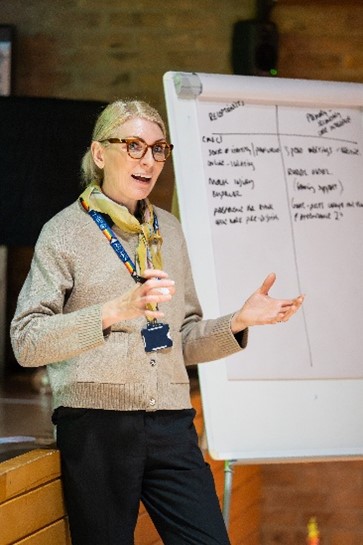
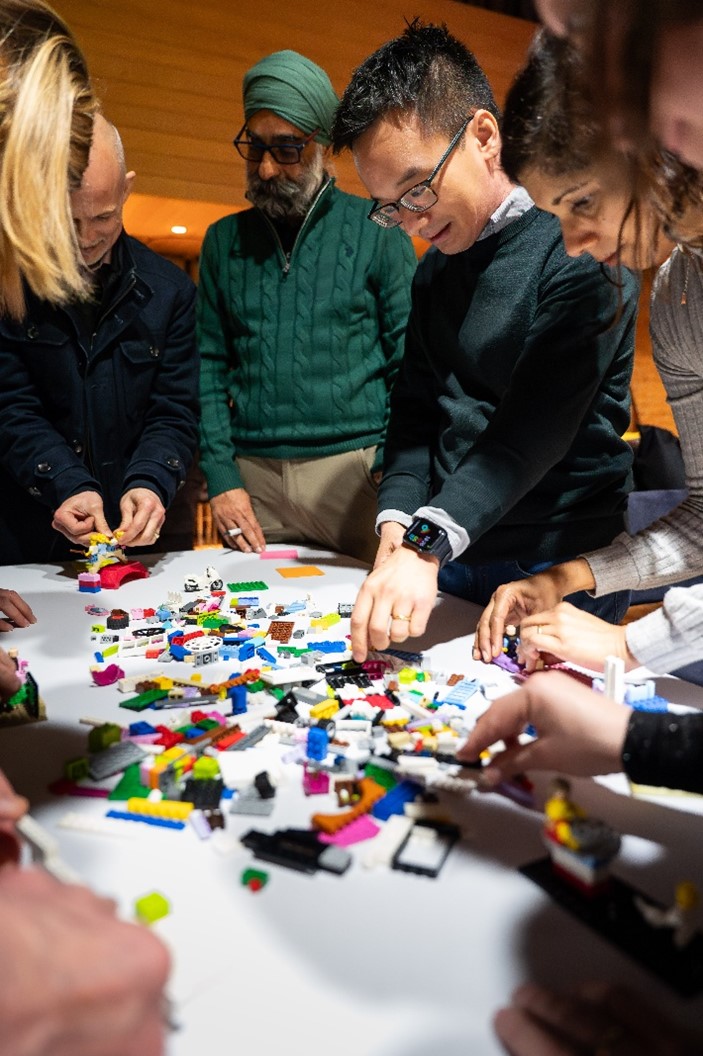
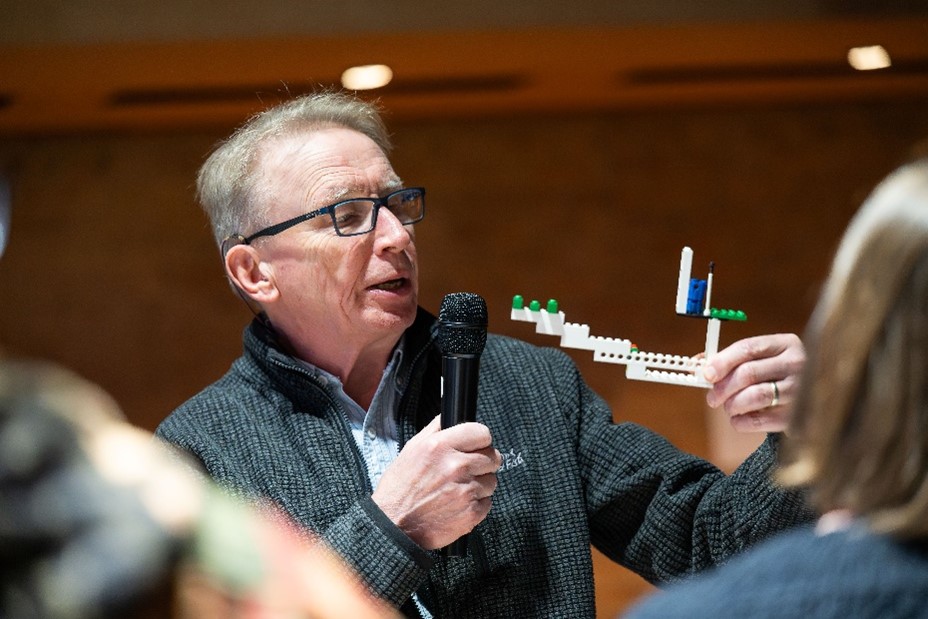
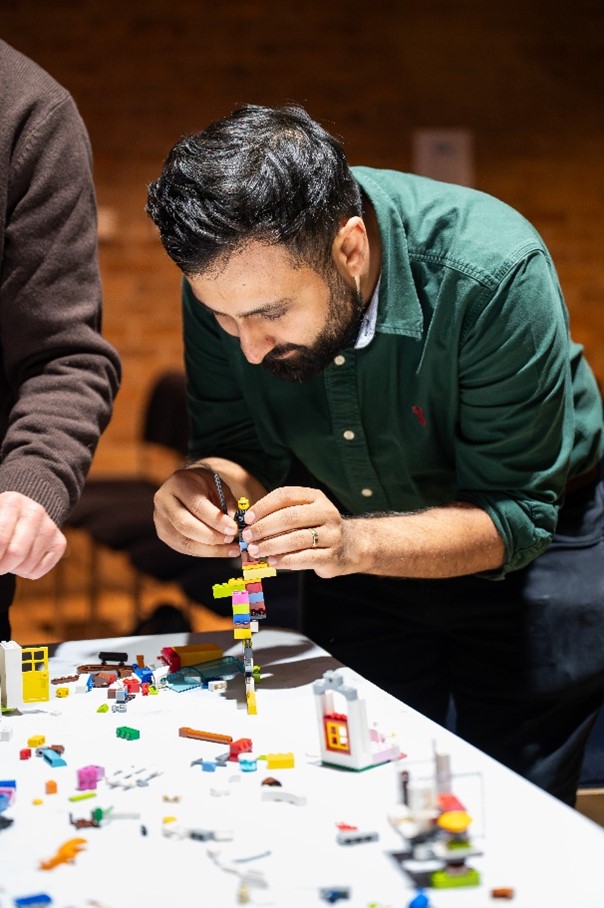
In a highly interactive workshop which I ran, GP tutors were asked to visualise the future of workforce sustainability by building it with Lego . The guiding question was:
What does the future of workforce sustainability look like to you, in relation to general practice in under-served communities?
What happened in the session?
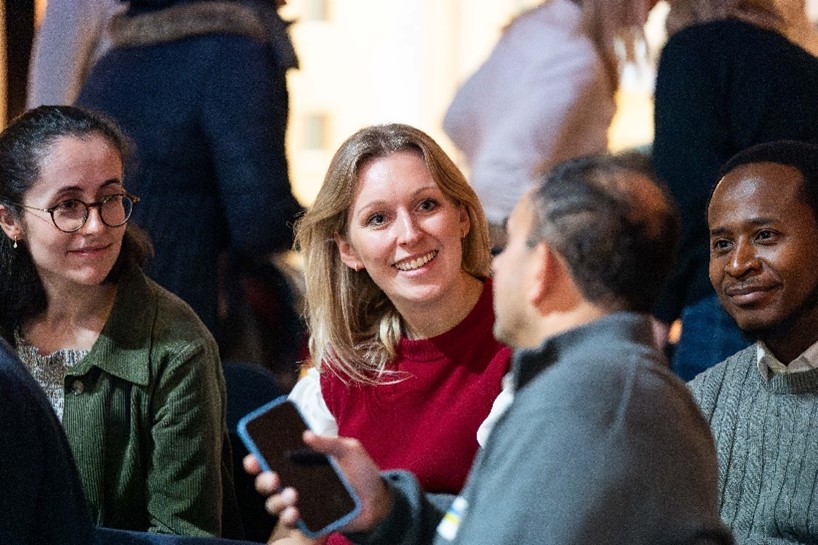
An array of Lego models emerged amongst joy, laughter and some frustration!
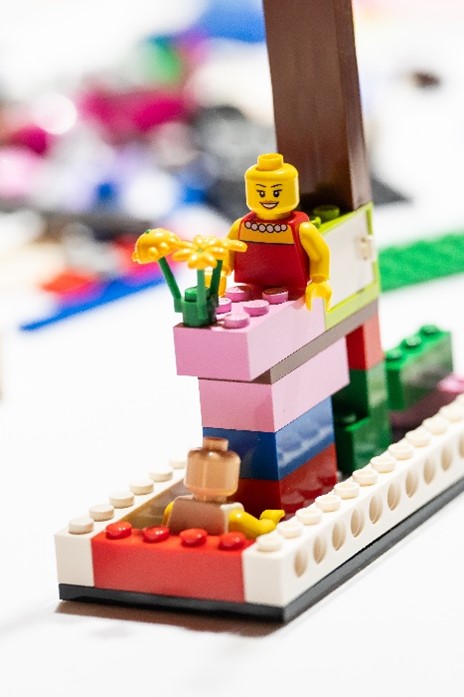
The models revealed clear and consistent themes about what sustains people working in general practice. The models that emerged blended creative ‘dreams’ with practical necessities and offered tangible insights into what sustainable working lives might look like.
One model portrayed a vision of a five star general practice with open access but balanced with some barriers in place for accessing staff, a building with many windows, a gym for staff and a garden with flowers that reflected the desire for physical changes to the environment, all to support well-being. This was “the dream”.
Some models reflected a shift away from the pursuit of ‘perfection’ towards acceptance of ‘good enough’ systems that were seen as a more inclusive approach to workforce sustainability.
Other models highlighted the importance of not being “tied to the desk”. Coffee rooms and shared spaces for conversation featured prominently, as did green spaces for rest, creating a visually restorative environment for GPs and their teams.
These models stood in stark contrast to the reality described by many tutors. General practices in many inner-city or deprived areas can be cramped, windowless and functional. This view of the future represented a need for an environment that reflects staff and patient wellness.
Across the Lego models common reflections occurred: the importance of the physical environment, care and, human connection are necessary for staff to thrive in high-pressure, complex environments.
Connecting aspiration to evidence: The realist review workstream - Workforce Voices
While the Lego session captured aspirations, our realist review workstream helps to understand how, why, and in what situations staff want to stay working in the NHS. It is one of a broad range of research approaches and methodologies being used in the Workforce Voices research partnership to understand and address workforce sustainability.
To identify and create meaningful change, we need to understand what is already known about workforce challenges, and potential solutions, for different groups. Alongside Sophie Park, I am working with NHS staff and patients to shape our literature searches and support the interpretation of findings. The conference workshop allowed us to take our early research hypotheses back to practitioners and explore how these ideas resonated with their lived experience as GPs.
Discussions reflected key themes already emerging from the reviews. Our research on GP receptionists and administrators highlights how they often absorb patient frustration, yet remain professionally undervalued. In our discussions, GP tutors echoed concerns that that increasing digitalisation can feel "de-humanising" and isolating for these staff members. Conversely, a "good secretary" was described as the bedrock of a practice - an essential link that keeps the system human.
Feedback on the primary-secondary care interface was equally stark. Shifting "goalposts" and a lack of mutual understanding between GPs and hospital consultants were seen as eroding trust and increasing workloads, reinforcing patterns already identified within the evidence base.
This feedback is informing how we interpret the evidence on these topics.
Building the Future: From Aspiration to Evidence
The NHS 10-Year Health Plan provides the what: ambitious goals for improved patient outcomes and workforce sustainability. However, the how, why and for whom must be generated through rigorous research and genuine collaboration with the people who keep the system running.
By combining the creative aspirations of our Lego workshops with the evidence-led insights of our realist reviews, we are developing a clearer picture of what works, for whom, how, why and under what circumstances. These conversations help move the work towards action, grounding future solutions in both evidence and lived experience.
Our realist reviews and our continued partnership with the individuals using and working within general practice in under-served areas aim to develop the evidence-led actions necessary to address the stresses in the system’s structures. This research ensures we develop solutions that aim to stabilise the workforce and deliver equitable care, making the promise of the NHS 10-year health plan achievable.
We are taking this momentum straight into the heart of neighbourhood health. An upcoming event with will invite practitioners on the frontlines of London’s most deprived areas to come together to share insights and collectively shape what equitable, sustainable healthcare looks like in the places that need it most.
To learn more about our work, you can visit the Workforce Voices webpages.
What to read next
Navigating GP access and triage: Resources to support patients
25 November 2025
For patients, understanding how decisions are made about the format, urgency and staffing of the care they receive in their GP practice can feel complicated. By examining everyday interactions, our ModCons study has shed light on how decisions are made in general practice - and created a visual guide to help patients understand how to book an appointment and get the right kind of care from their GP practice.